1. What did you do?
The main aim of this week’s session was to learn about directing. Because of this the very first thing we did was watch a film by the director, Richard Heap. The film was called The Runaways and is currently in post-production, as the director is trying to find ways to exhibit the film. The Runaways is a film set in North Yorkshire and is set around the story of 3 young kids, and two donkeys who are trying to find their Mum. After we watched this film, Richard Heap then came and spoke to us, and answered questions we had on the film, and just talked about it in general, such as how set’s were built, or why he framed certain scenes.
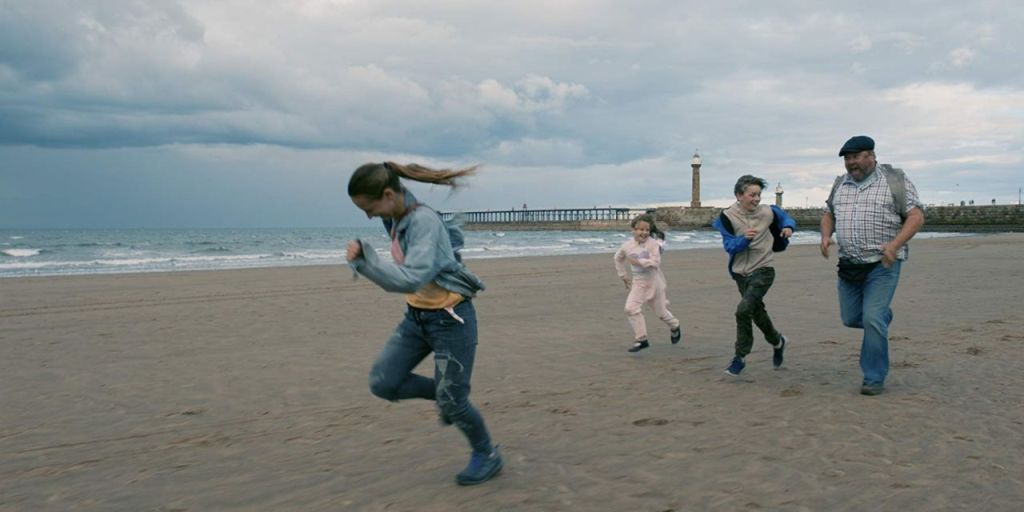
After this, we were then put into our groups for the short-film and our task was to try and generate more ideas for our script. This was really important for my group because while we had a basic story for our film, we hadn’t really progressed it at all. During this session, Richard Heap came to talk to our group, and gave us some helpful ideas such as, trying to use more then one location (before this it was all set around a table) to give some variety to the film.
2. What have you learnt?
After the screening of The Runaways someone in the Film Academy asked what it was like to work with child actors, due to child actors appearing in the film. I had never really thought about how different using a child actor would be in a film, however, Richard Heap gave a very good answer, and funnily enough, advised against it, especially in your first film. This was because when working with child actors, there are a lot of restrictions and complications, such as, having to have a chaperone, not being able to put their head underwater in the sea if they are under 16 (a very important part of the film) and also having a teacher give them education and school work, while they are on set. During this session I also asked, if it was difficult to get filming permission because it was his first feature film, and surprisingly he said it was probably easier then if the film was made by a big production studio, as the processes of asking for permission was much more personal, and would not require whole streets being shut down. This taught me that I should be scared to try and get nice locations in my film.
One other thing that I learnt, was when finding money for your film, it is probably better to get fiance the more traditional way, for example off a production company, instead of getting money off lots of different people. I learnt this because a problem Richard Heap was having was exhibiting his film, and the main reason he was struggling to do this was because he had gone the more unconventional route of financing his film, through getting money off lots of different people, and this was now coming back to bite him.
3. How have you worked with others?
While in the first half of the day, when we were watching The Runaways and talking to Richard Heap, we didn’t do much group work, the majority of the second half of the day was spent in groups, working on our short-films. Within this session we all gave suggestions on what should happen in our film, and our script really progressed. For example, before this session we had the idea of two assassins who are hired to kill each other but don’t know that both of them are assassins, however now we have decided that while two assassins are still hired to kill each other, they actually fall in love, however despite this this story still ends tragically in a darkly comedic way. We also thought much more about the charterers and their personalities (one should have a thick Yorkshire accent, and the other should be French) and how these contrast. Through us all working well together, and listening to each others ideas, we were able to give the script writer enough ideas to be able to finish the first draft of the screenplay by Monday.
4. What do you need to develop?
One thing I need to develop is learning how to correctly put subtitles within a video. This is because within our short-film we have decided that the charterers will have voice-overs which contrast with what they are saying in real life (similarly to the The End of the F***ing World). And due to one of our characters being French we decided it would be a good idea for his voice-overs to be in French, therefore meaning we will have to use subtitles in our film. Since I am the editor of the film adding subtitles will be my job, and I must learn aspects such as, what font subtitles should be in, what colour, how long should they appear on screen and where they should appear on screen.
 BFI Film Academy