At the most recent Film Academy Session with Yen Yau she gave a talk on getting into the film industry. Within this talk someone asked her about apprenticeships in film, and sadly she said there currently weren’t really any. This is because while apprenticeships are great as they allow you to get real experience of the job and be paid at the same time, the government requires them to last for a certain amount of time, for example a year. This isn’t very useful within the film industry as if someone is trying to get experience on set, this may only last for a few weeks before the shoot ends, which is therefore not considered long enough. However, ScreenSkills an industry-led skills body for the UK’s screen-based creative industries are trying to develop apprenticeships for film by trying to make it possible for apprentices to go straight from on production to another as soon as it ends, getting constant experience. However, as it stands this does not exist yet.
One of the most popular entry-level jobs into the film industry, and a route many people take is becoming a film runner. A film runner is in simply someone who ‘runs’ around making sure everything ‘runs’ smoothly. They provide vital assistance to senior figures within film, television or a video production company. Film runners are normally expected to do a wide variety of tasks, many of which are quite low-skilled. For example, they may be asked to delver messages, do errands, get coffee, carry equipment and drive actors or other staff members to locations. These tasks normally happen when someone needs to get something done but doesn’t have time to do it themselves, and while it includes working long hours and doing a lot of running around it can give a great opportunity to network and build up contacts to help get your foot in the door and progress you career.
Studying at university is becoming quite a popular choice for younger people as it allows them to develop skills using technical equipment, and gain experience making films, without having to go through the hassle of getting a job. This comes with many benefits such as getting to use equipment free (since you are paying for the course) to make sure film and build up your CV. It can be also be a way of generating contacts and getting into the industry by making friends with people on the course, getting job-placements at production houses or submitting films to film festivals. However, there are a few draw backs in going to university. Firstly, the you have to pay a minimum of £9,250 a year to go to university, and while this is in a lone and isn’t paid until you earn over £25,725 a year, it is still a big debt which has to be payed back in later life, and that money could have been used to make films instead. Also, a degree in film/film production has no guarantee in getting a job in the industry, so therefore could be quite a risky option, if not thought through.
There are quite a lot of online opportunities in getting into the film industry. These come with the benefit of being very cheap (usually free) and only having to have an internet connection to do them. One common opportunity online that people use to try and get their work noticed is competitions. At the start of the Film Academy we had a talk from Rebecca Mark Lawson who has her own production company called Tyke Film. She talked to us about a short-film called 2:20 with a premise of happening in two minutes twenty. She said the student that did this short-film entered a competition run by Virgin Media (the competition is not longer running) and ended up wining, and getting a prize of £50,000. Not only is this monetary reward great, but what probably helped him the most was winning the competition and getting noticed by the industry, as he proved that he could make good quality work. YouTube is now also making it possible for creator’s work to get noticed without having to go down the traditional distribution rote (releasing films in cinemas). For example, a creator going by the name Rapman released a trilogy called Shiros Story for free onto YouTube, and by doing this it achieved more than 10 million views. This has clearly got him noticed by more people as a great storyteller, because in 2019 he made a feature film Blue Story which gained a wide released in UK cinemas.
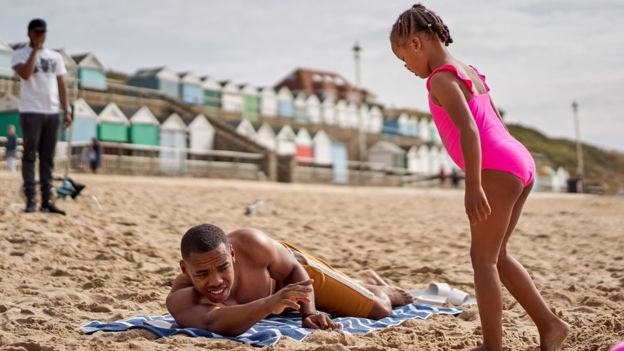
Film festivals are an opportunity to get work you have produced noticed. They give a platform for people to view feature films or short-film that have not yet been disturbed. A big benefit of film festivals is that people can view your work and you can view other peoples work and therefore create connections with people and network. Producers also go to film festivals and sometimes after viewing a finished film they will try to buy it and get the rights to distribute it under their production company. An example of this happening would be with the animated film I Lost My Body which after it’s Cannes Premier Netflix acquired the worldwide distribution rights to the film, excluding France, Turkey, China and the Benelux region. The short-film my group has produced in the Film Academy will be shown at the Spirit of Independence Film Festival, which is a celebration of micro-budget filmmaking, and is very exciting!
Lastly, an option I have undertaken to progress into the film industry is by taking one of the courses which the BFI advertise which is the BFI Film Academy. This is available to 16-19 year old’s and allows them to gain experience of the film industry by creating a short-film and putting on a wide variety of masterclasses, ranging from, cinematography to script-writing. The BFI also put on other courses such as the residential which last between 1 or 2 weeks and are designed to give more specialist filmmaking skills including, animation, craft skills, documentary, film programming, etc. BAFTA also run a mentoring scheme which involves BAFTA members, Award-Winners and leading practitioners who volunteer as mentors to provide disadvantaged young people experience on media projects.
 BFI Film Academy